Steady Hands Needed
Reflections on the role of the Secretary of Foreign Affairs and Trade in Australia 1979-1999
Edited by: Trevor Wilson, Graham CookePlease read Conditions of use before downloading the formats.
Description
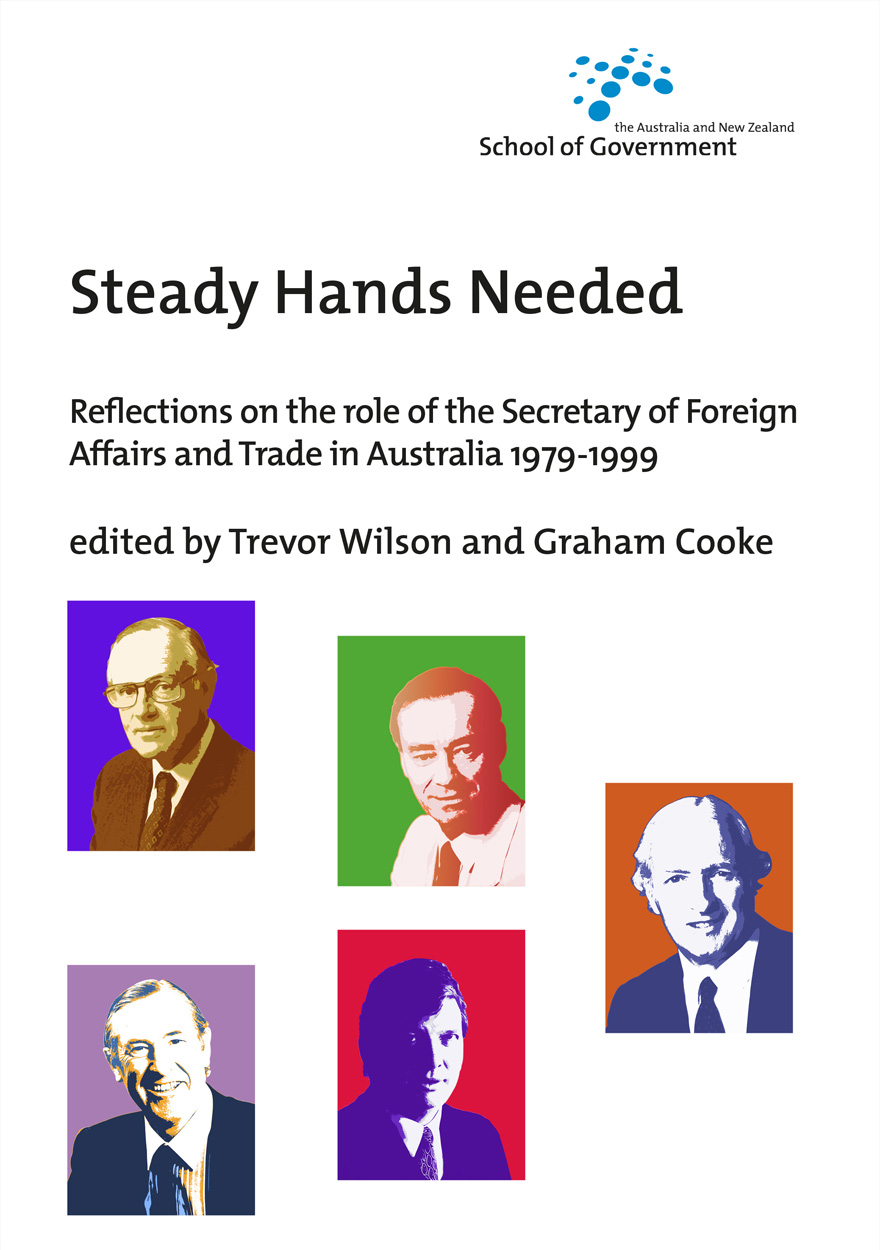
In this monograph, five former secretaries of the Department of Foreign Affairs and Trade (DFAT) reflect on their experiences and the challenges of their times. A far cry from the pukka fantasies of ‘Yes Minister’, their recollections reveal the realpolitik of the policy front line where the secretary must stay ahead of emerging themes and issues in Australia’s international relations while simultaneously exercising governance oversight and providing leadership to a large, professional, diverse and dispersed organisation. From the Cold War to the War on Terror; from the floating of the dollar to GATT and the WTO; managing relations big and small, within our region and without; through relentless administrative reforms, technological change and changes of government; steering DFAT requires ‘steady hands’. This collection of public lectures presented in 2006 to the Australian Institute of International Affairs (AIIA) offers an invaluable resource for those with an interest in recent Australian history, foreign policy and public sector administration.
Details
- ISBN (print):
- 9781921536120
- ISBN (online):
- 9781921536137
- Publication date:
- Aug 2008
- Imprint:
- ANU Press
- DOI:
- http://doi.org/10.22459/SHN.2008
- Series:
- Australia and New Zealand School of Government (ANZSOG)
- Co-publisher:
- The Australia and New Zealand School of Government (ANZSOG)
- Disciplines:
- Arts & Humanities: History; Social Sciences: Politics & International Studies, Social Policy & Administration
- Countries:
- Australia
PDF Chapters
Please read Conditions of use before downloading the formats.
- Preliminary Pages (PDF, 540KB)
- About the editors (PDF, 53KB)
- Acknowledgements (PDF, 53KB)
- Foreword (PDF, 77KB)
- Prologue: Steady hands needed for turbulent times — the DFAT secretaries 1979–99 (PDF, 151KB) – Trevor Wilson
Other publications that may interest you