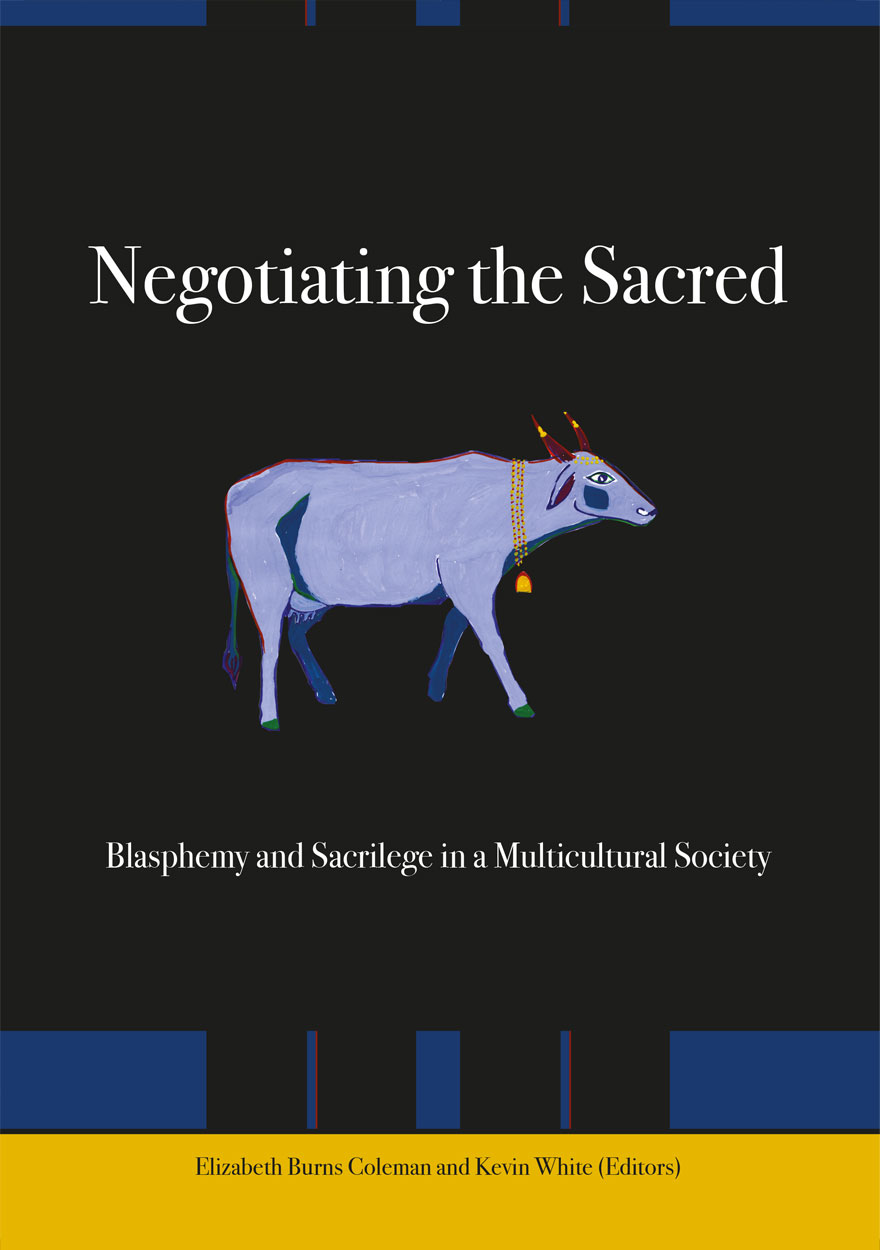
Negotiating the Sacred
Blasphemy and Sacrilege in a Multicultural Society
Edited by: Elizabeth Burns Coleman, Kevin WhitePlease read Conditions of use before downloading the formats.
Description
This cross-disciplinary exploration of the role of the sacred, blasphemy and sacrilege in a multicultural society brings together philosophers, theologians, lawyers, historians, curators, anthropologists and sociologists, as well as Christian, Jewish and Islamic and secular perspectives. In bringing together different disciplinary and cultural approaches, the book provides a way of broadening our conceptions of what might count as sacred, sacrilegious and blasphemous, in moral and political terms. In addition, it provides original research data on blasphemy, sacrilege and religious tolerance from a range of disciplines.
The book is presented in four sections:
Section I: Religion Sacrilege and Blasphemy in Australia.
Section II: Sacrilege and the Sacred
Section III: The State, Religion and Tolerance
Section IV: The Future: Openness and Dogmatism.
The book will appeal to both those actively involved in religious negotiation and to scholars and students of religion in history, philosophy, anthropology, sociology and political science.
Details
- ISBN (print):
- 9781920942472
- ISBN (online):
- 9781920942489
- Publication date:
- Jun 2006
- Imprint:
- ANU Press
- DOI:
- http://doi.org/10.22459/NS.06.2006
- Disciplines:
- Arts & Humanities: Cultural Studies, Philosophy & Religion
- Countries:
- Australia
PDF Chapters
Please read Conditions of use before downloading the formats.
If your web browser doesn't automatically open these files, please download a PDF reader application such as the free Adobe Acrobat Reader.
To copy a chapter DOI link, right-click (on a PC) or control+click (on a Mac) and then select ‘Copy link location’.
- Negotiating the sacred in multicultural societies (PDF, 135KB) – Elizabeth Burns Coleman and Kevin White doi
Section I. Religion, Sacrilege and Blasphemy in Australia
- Negotiating religious dialogue: A response to the recent increase of anti-Semitism in Australia (PDF, 144KB) – Suzanne Rutland doi
- Are we capable of offending God? Taking blasphemy seriously (PDF, 141KB) – Helen Pringle doi
- A flaw in the nation-building process: Negotiating the sacred in our multicultural society (PDF, 113KB) – Veronica Brady doi
- The paradox of Islam and the challenges of modernity (PDF, 130KB) – Kuranda Seyit doi
Section II. Sacrilege and the Sacred
- Stretching the sacred (PDF, 151KB) – Elizabeth Burns Coleman and Kevin White doi
- Sacralising the profane, profaning the sacred (PDF, 127KB) – Colin Tatz doi
- Is that a human skull? All in the name of art! (PDF, 156KB) – Dianne McGowan doi
- The bourgeois sacred: Unveiling the ‘secular society’ (PDF, 114KB) – Liam Dee doi
Section III. The State, Religion and Tolerance
- Sacrilege: From public crime to personal offence (PDF, 122KB) – Ian Hunter doi
- Expressions of religiosity and blasphemy in modern societies (PDF, 153KB) – Riaz Hassan doi
- Negotiating the sacred in law: Regulation of gifts motivated by religious faith (PDF, 154KB) – Pauline Ridge doi
- Negotiating a religious identity in modern Japan: The Christian experience (PDF, 185KB) – Colin Noble doi
Section IV. The Future: Openness and Dogmatism
- ‘We already know what is good and just…’: Idolatry and the scalpel of suspicion (PDF, 121KB) – Winifred Wing Han Lamb doi
- The sacred and sacrilege—ethics not metaphysics (PDF, 180KB) – Eilidh St John doi
- Resolving disputes over Aboriginal sacred sites: Some experiences in the 1990s (PDF, 142KB) – Hal Wootten doi
Other publications that may interest you